
For most of the last decade, the conversation around competitive gaming gear stayed inside a small circle of people who already knew the difference between a control pad and a speed pad. That circle is getting much bigger, and the reason is money.
The Esports World Cup Foundation confirmed in January that this summer’s tournament in Riyadh would carry a $75 million prize pool, the largest in the history of multi-title competition. That number does something subtle to the people watching at home. It turns a hobby into something that looks a lot like a career path.
And when an audience starts taking the activity seriously, it starts taking the equipment seriously too. Not because a mouse pad wins a tournament, but because the people on stage are visibly fanatical about every part of their setup, and fans copy what they see.
Why the Prize Pool Changes How Amateurs Think About Gear
There is a well-documented pattern in every competitive discipline: when the top of the pyramid gets richer, the base of the pyramid gets more deliberate. Aspiring players study what professionals use and try to remove every excuse between themselves and a better result.
In shooters and battle-royale titles, the variable that players obsess over most is consistency of aim. A mouse that tracks beautifully on one surface and skips on another introduces a variable nobody competing for real stakes wants to tolerate.
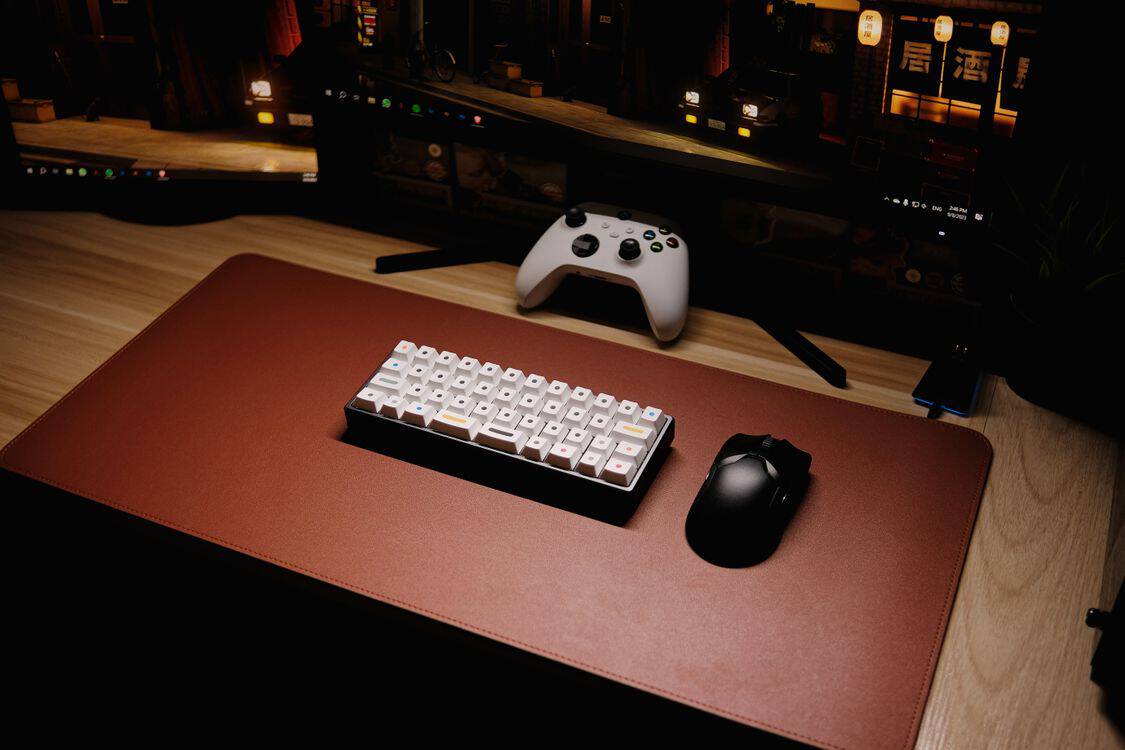
That is the quiet logic behind the surge of interest in dedicated playing surfaces. It is not that a particular pad grants an advantage. It is that an inconsistent or undersized one introduces a disadvantage, and players climbing toward something that now pays real money refuse to give away free mistakes.
The 2026 event spans twenty-four games and twenty-five tournaments, which means the influence is not contained to one genre. Strategy players, fighting-game competitors, and racing-sim drivers all see their disciplines elevated at once, and all of them touch a surface for hours a day.
The Trickle-Down From Riyadh to the Bedroom Desk
Most people who watch the Esports World Cup will never qualify for anything. That has never mattered for consumer behavior. Recreational runners buy carbon-plate shoes; weekend cyclists ride bikes that cost more than the prize money of the races they will never enter.
Competitive gaming is following the same curve. The visibility of a richly funded global event makes the gear feel legitimate, and legitimacy is what loosens wallets. A teenager who watches a final in front of millions starts to see their own desk as a training ground rather than a place to mess around.
What is interesting about the surface specifically is that it is one of the few upgrades that is both cheap and visible. A high-refresh monitor costs hundreds. A new GPU can cost more than a month of rent. A large playing surface is comparatively trivial, which makes it the easiest first step toward a setup that feels intentional.
There is also an identity component that the prize money amplifies. As the scene grows, players want their space to signal which games they belong to, which teams they follow, which corner of the culture they call home. The surface under the keyboard and mouse is the largest flat canvas on most desks, and people increasingly treat it like one.
What This Means for the Next Twelve Months
The tournament runs through the summer, and viewership tends to spike hard during finals weekends. Each of those spikes drops a fresh wave of newcomers into the ecosystem, and newcomers buy gear in a predictable order.
Headsets and mice usually come first because they are the most talked-about. Surfaces tend to follow once a player has used their setup long enough to notice that the small pad they started with does not give their arm room to move during fast, low-sensitivity swings.
That second purchase is where the shift toward larger and more personalized surfaces is happening. Players are sizing up, both literally and in terms of how seriously they want their desk to look the part.
It is worth remembering how recently this kind of investment looked absurd to outsiders. A decade ago, spending real money on a playing surface marked someone as eccentric. The prize pool has quietly retired that judgment, because it is hard to mock a setup when the people using a similar one are competing for millions.
Broadcasters reinforce the effect without meaning to. Camera cuts to a competitor’s hands, close-ups of the gear, and analyst chatter about settings all send the same message to a watching newcomer: the details are part of the craft. People absorb that and go shopping.
None of this requires anyone to believe that gear makes a mediocre player good. It only requires the audience to keep growing and to keep treating competitive play as something worth investing in. The prize pool guarantees both. A summer of record-breaking broadcasts will hand the consumer side of gaming its biggest crop of motivated newcomers in years, and a lot of them will start by fixing the surface their hand lives on all day.