
For most people moving to Kyle or Buda, the checklist is familiar: find a house, register the kids in school, locate a primary care doctor. Somewhere near the bottom of that list — often left until something hurts — is finding a dentist.
That delayed priority is quietly becoming a systemic problem in Hays County, where population growth has outpaced the development of specialized healthcare infrastructure, and where the consequences are showing up in dental chairs years after a tooth problem first began.
Hays County grew by more than 10,000 residents between July 2024 and July 2025 alone, according to U.S. Census Bureau estimates. That’s roughly 27 new residents every day. The county has now doubled its population since 2010, and projections from regional economic research suggest further growth of more than 22 percent by 2028.
The I-35 corridor between Austin and San Antonio — running directly through Kyle, Buda, and San Marcos — has become one of the most intensely developed suburban stretches in the American South. The demand for services that support daily life is arriving faster than the professionals who provide those services.
The Infrastructure Gap Behind the Growth Headlines
There is a particular lag in specialty healthcare that rarely makes local news. General dental practices open with relative speed — the capital requirements are manageable and patient volume is predictable.
Specialty dental care is a different matter. The kind that handles full-mouth restoration, jaw reconstruction, implant surgery, and cases involving significant bone loss requires a longer training pipeline, a substantial equipment investment, and a patient base that tends to consolidate around a smaller number of providers with the specific expertise to handle them.
The national picture adds context. The number of federally designated dental professional shortage areas in the United States reached 7,229 as of late 2025, according to data reported by Texas Dentists for Medicaid Reform — an increase of nearly 350 shortage areas in a single year.
Texas ranks among the states with the most shortage areas in the country, and the problem is not confined to rural border counties. Rapidly growing suburban regions face a different version of the same strain: not enough specialized providers to keep pace with a population that is arriving with existing dental needs, interrupted care histories, and no established relationship with local specialists.
In Central Texas, that tension is particularly visible along the I-35 corridor. Austin Community College announced plans in early 2026 to launch a dental hygiene program at its Hays Campus in Kyle — a direct institutional acknowledgment that the corridor’s workforce supply does not currently match its patient demand. Meanwhile, new general dental chains are opening locations in Kyle and the surrounding area, serving the routine-care market while the specialized-care gap remains less visibly addressed.
What Full-Mouth Patients Face When They Move to a Fast-Growing Area
People who need full-mouth dental restoration are among the most affected by provider gaps. Whether their situation comes from decades of deferred care, systemic conditions that affected bone health, or tooth loss from injury or disease, their cases require continuity.
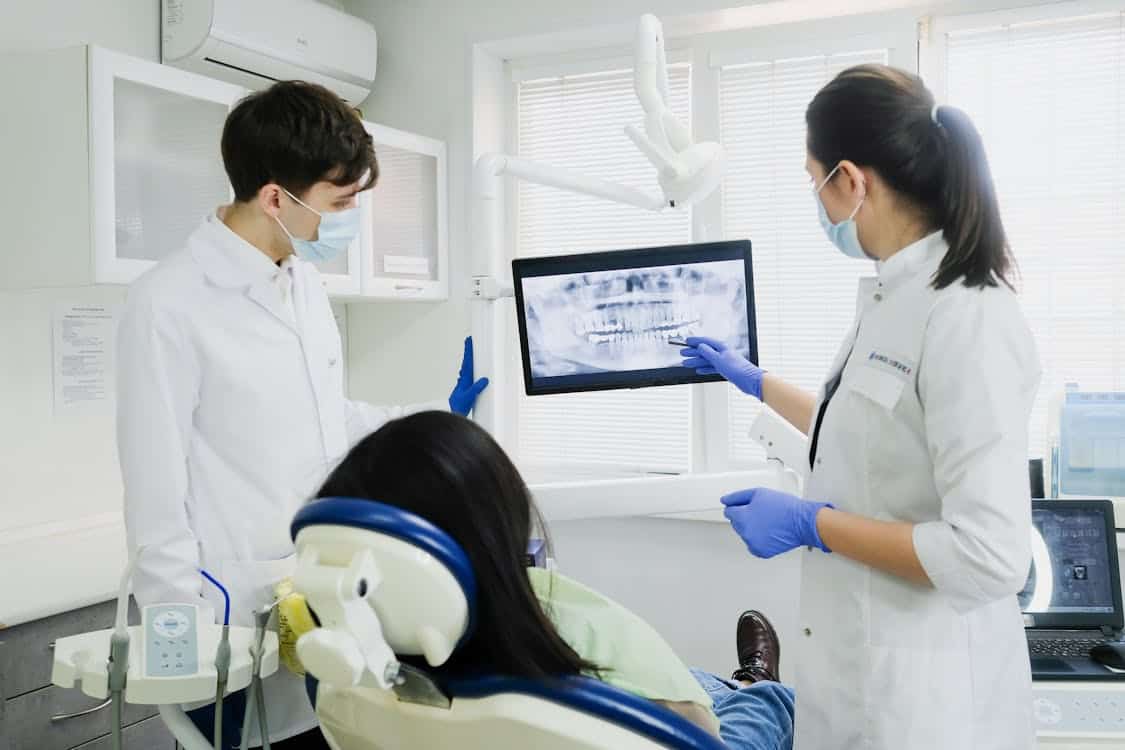
A patient mid-treatment who moves to Hays County from Dallas or Houston cannot simply walk into any office and pick up where they left off. They need a provider with imaging capabilities, surgical experience, and the ability to assess bone volume, prosthetic fit, and long-term implant planning in a single integrated practice. That is not a service that every new dental office along the I-35 strip can provide.
The mismatch has a practical consequence: patients delay. They arrive in a new county, fail to find a specialist quickly, and defer the consultation they need. Months pass. Bone loss that was already progressing continues unchecked. By the time they sit down with a specialist, the case is more complex and more expensive than it would have been at the point of their last evaluation.
Domestic migration continues to drive the majority of the county’s growth. Of the more than 10,000 new residents in the most recent Census period, the largest share came from domestic relocation rather than natural population increase or international migration.
Many of those arrivals are adults in the age ranges most likely to carry unresolved dental histories: middle-aged professionals relocating from higher-cost urban markets, retirees following family members to the suburbs, and working families who prioritized housing affordability over staying close to established healthcare providers. Each of those groups has a different reason to need specialty dental care, and each faces the same practical challenge of finding it in a county that is still building out the infrastructure to support them.
The Difference Between Access and Availability
Access and availability are not the same thing in healthcare. There are dental offices in Kyle. There are hygienists, general dentists, and chains offering discounted entry-level services. Availability exists.
What is less evenly distributed is access to specialists with the depth of training and case volume to handle patients whose needs go beyond a cleaning and a crown.
Full-mouth implant cases require a provider who has worked through the full range of complications: patients with inadequate bone volume who need grafting, patients with systemic conditions that affect healing, patients who have been wearing ill-fitting dentures long enough that the underlying ridge has changed shape significantly. That clinical experience does not distribute itself uniformly across a fast-growing suburban market just because the market is growing. It takes years to build.
For residents of Hays County navigating this for the first time, the practical guidance is to start the search before the need becomes urgent. The providers who do this work well tend to have longer lead times for consultations precisely because demand has outpaced supply. That lag is not going away on its own anytime soon. The county will keep growing. The infrastructure will eventually catch up. In the meantime, the gap is real.