
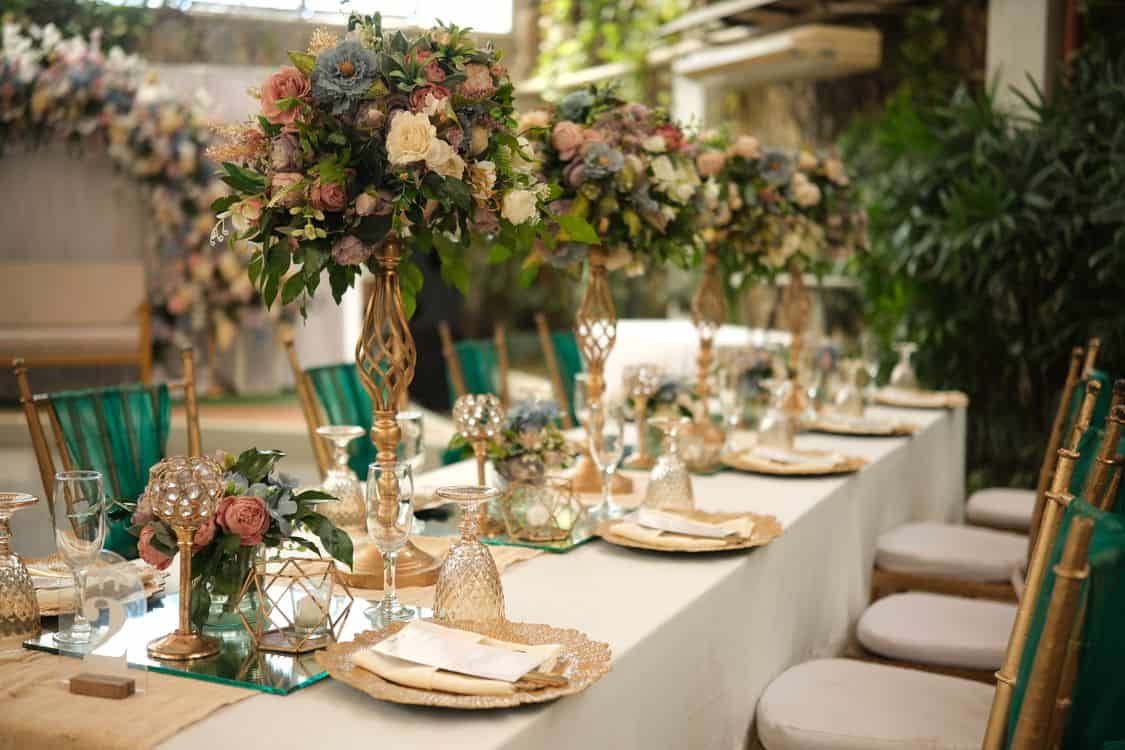
Ask ten newly engaged couples in Singapore how much a wedding banquet costs, and you’ll get ten different answers — most of them wrong by a wide margin. A 2026 analysis by wedding planning platform Vows.sg, drawn from 396 wedding package singapore listings across 115 venues, put real numbers behind the guesswork.
The spread is enormous. Per-table pricing ranges from S$498 at a vegetarian restaurant in Leng Kee to S$4,292 at a Sentosa resort designed by Norman Foster. Most couples land somewhere in the middle, but the gap between quoted price and final bill is where the real surprises happen, and it’s a gap that catches even couples who think they’ve done their homework.
What makes the dataset useful isn’t the extremes — it’s the middle. Once 396 packages are laid side by side, patterns emerge that are almost impossible to see when a couple is only comparing the three or four venues they happened to visit in person.
Where Most Couples Actually Land
According to the breakdown, 33 percent of the 396 tracked packages fall into the S$1,200 to S$1,800 per table bracket — the single largest segment of the market. Budget options under S$1,200 make up another 24 percent, while premium packages between S$1,800 and S$2,500 account for 28 percent.
Only 8 percent of venues sit above S$2,500 a table, a tier reserved for properties like Raffles Hotel, Capella Singapore, and Marina Bay Sands. The median across the full dataset sits around S$1,500 per table before service charge and tax, which for a typical 20-table wedding works out to roughly S$30,000 before any surcharges are applied.
The mid-range tier tends to include a fairly consistent set of inclusions: a 10-course dinner, a complimentary wedding suite for one night, basic table centrepieces, and parking for roughly one car per table. Premium and luxury tiers add dedicated wedding planners, elaborate floral arrangements, and — at the very top end — bespoke menu customisation and premium liquor packages.
The budget tier tells its own story about where couples can genuinely save without compromising the experience. Heritage Chinese restaurants like Spring Court, operating in Chinatown since 1929, sit at S$888 a table with none of the hotel markup — proof that a lower price point doesn’t automatically mean a lower-quality banquet, just a different kind of venue entirely.
The Surcharge Most Couples Forget to Budget For
The figure that trips up the most couples isn’t the headline price at all. It’s the “++” symbol sitting quietly next to it, a detail easy to skim past when a couple is comparing a dozen quotes at once.
Service charge and GST together typically add close to 20 percent to a quoted table price. A table listed at S$1,500 becomes roughly S$1,798.50 once both are applied — and across a 20-table wedding, that gap alone works out to nearly S$6,000 that many couples never see coming until the final invoice arrives.
Some venues, more often independent Chinese restaurants than hotels, quote nett pricing instead. The analysis found this distinction alone can shift a couple’s effective budget by thousands of dollars, depending purely on which type of venue they choose — a variable that has nothing to do with food quality or service standard, and everything to do with how the venue structures its billing.
Beyond service charge and GST, the data flagged a longer list of costs that rarely appear on the headline quote: corkage fees running S$25 to S$50 a bottle, peak-period surcharges of S$50 to S$200 a table on Saturdays and auspicious dates, and overtime charges that can run S$500 to S$1,500 an hour for events pushing past midnight.
Negotiating Room Still Exists
Despite the scale of the market, couples aren’t entirely at the mercy of list prices. Venue managers rarely discount the per-table rate directly, since it looks bad on paper, but they will often add extras instead — upgraded menu courses, a complimentary wine package, or an extended wedding suite stay.
Timing matters just as much. Weekday dinners and Sunday lunches can run S$100 to S$300 cheaper per table than a Saturday evening slot, a gap that adds up quickly across a full guest list — for 20 tables, that’s a potential S$6,000 in savings from a date change alone.
Booking early carries its own financial logic. Banquet prices in Singapore typically rise 3 to 5 percent a year, so locking in a rate 12 to 18 months ahead of an event can save a meaningful sum on a large guest list, even before any active negotiation begins.
With 396 packages now mapped across the market, the days of couples negotiating blind are largely over — the harder part is simply knowing which questions to ask before signing.
Even at the negotiating table, the fundamentals rarely change: a couple who walks in knowing where their target venue sits within the broader 396-package dataset has a materially stronger position than one relying on a single quote in isolation.
The minimum table guarantee is another lever worth understanding before negotiations even start. Most venues require 15 to 25 minimum tables, and couples with a smaller guest list can sometimes negotiate that threshold down, or convert unused table capacity into a drinks package or room upgrade instead of paying for tables that will sit empty.