
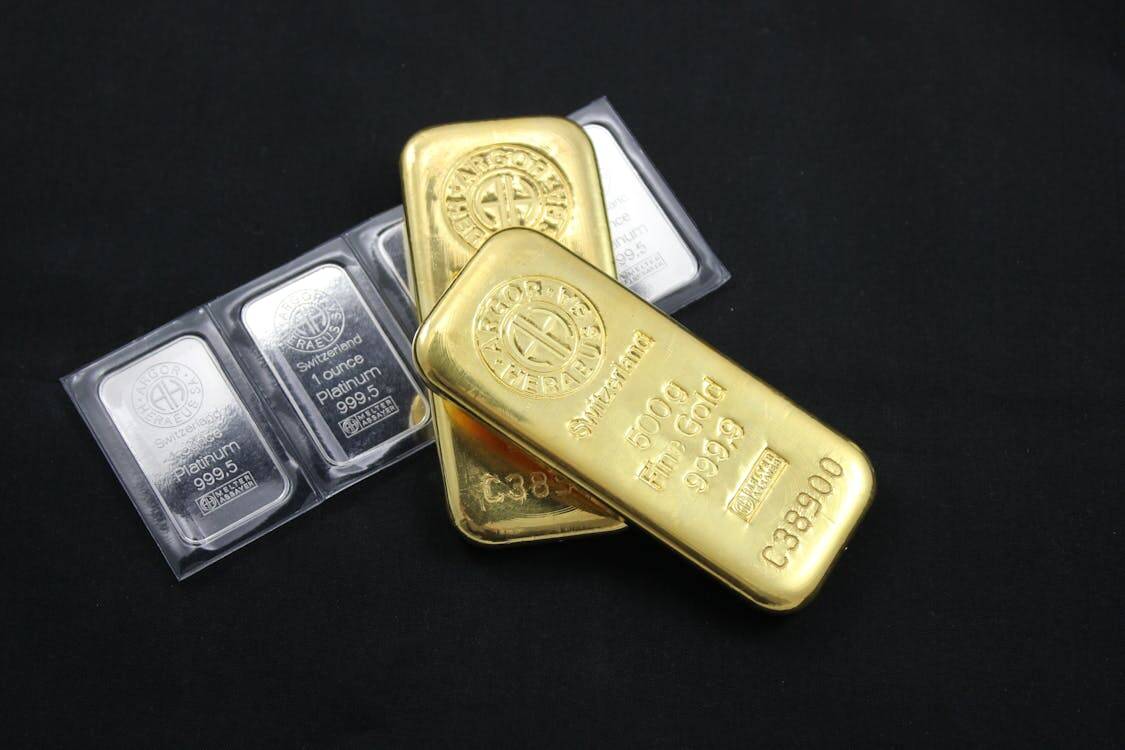
Precious metals have been a go to refuge when faith in paper claims falters and markets wobble, offering a kind of insurance that has comforted savers across eras and continents. Their appeal combines finite supply, ease of recognition and a long record of exchange that stretches from ancient empires to modern vaults and central bank reserves.
Savers and investors often reach for gold or silver when balance sheets look stretched, political news adds uncertainty or central bank actions change the expected path of inflation. That reaction blends clear economic logic with deep psychological preferences for things one can touch and store in private custody.
Historical Store Of Value
Gold and silver carry a long memory across civilizations and have served roles that range from daily coinage and ceremonial ornament to a basic unit of account, and that continuity matters when trust in newer instruments falters and social orders shift.
The ability of these metals to cross borders in both literal and symbolic fashion gives them a rare durability, as coins minted centuries ago still command interest and hold intrinsic appeal for collectors, museums and central banks alike.
Tastes, fashions and technology shift quickly, but the economics of scarcity and the cost and difficulty of extraction create a steady base level of value that has proved resilient over many cycles and across varied institutional regimes.
When paper promises have been reworked or replaced by new monetary experiments, these metals have repeatedly been taken out of the attic, vault or strongbox and put to work as a familiar store.
Hedge Against Inflation
Paper money can erode in purchasing power when governments print large sums to meet fiscal needs or when monetary policy loosens beyond market expectations, and ordinary savings can lose value in a decade or even a few years.
Precious metals oftentimes move independently of such pressures, rising as confidence in fiat units weakens, and that separation speaks to the reality that you cannot credit a metal into existence at a central bank s keyboard.
Correlation with consumer price dynamics is imperfect and there are long runs of flat pricing that test patience, yet across many episodes of rapid price inflation from the 1970s in some Western economies to more extreme cases elsewhere, gold and silver have provided material protection for those who held them.
For investors worried about lost purchasing power, allocating a meaningful portion of capital to a tangible asset can act as a buffer that eases the sting of currency devaluation.
Portfolio Diversification Benefits
Adding metal to a collection of equities, fixed income instruments and real assets changes the overall risk picture in ways that are often easy to observe but hard to quantify in a single number, and academic studies show that small allocations can materially lower portfolio volatility.
Some investors also consider building wealth with Money Metals assets as part of a broader allocation to physical bullion exposure. When stock markets fall or credit spreads widen, bullion prices have on many occasions moved differently from paper assets, which reduces aggregate volatility and allows for a smoother experience over multi year horizons and across asset cycles.
Sophisticated investors speak of correlation and covariance in statistical terms, yet for many private savers the appeal is simpler: owning a portion of wealth that does not ride in lockstep with the market can prevent forced sales in a liquidity crunch and preserve optionality.
No single instrument will eliminate risk entirely, but metal can act as a predictable counterweight that tilts the odds in favor of steadier outcomes over time.
Liquidity And Market Depth
Global markets for gold and silver operate at enormous scale, supported by primary exchanges, bullion banks, regional dealers and a long list of retail participants, which creates tight bid ask spreads for standardized bars and widely traded coin types and fosters continuous price discovery around the clock.
That depth means a holder who needs cash can normally liquidate inventory with limited market impact, and transactions are facilitated by a web of market makers, armored carriers and refineries that keep the chain flowing.
Collectible pieces and small lots are a different story because premiums and dealer margins rise when quantities shrink or when provenance matters, so buyers should factor in those extra costs when choosing how to own.
Institutional pathways such as exchange traded funds, cleared futures and allocated accounts permit exposure to price movements without the logistical burden of physical custody for those who prefer a more paper based approach to ownership.
Tangible Asset Advantages

Holding a bar or a coin in hand carries a qualitatively different sensation from owning an electronic entry on a brokerage screen, and that tangible presence has meaning beyond mere accounting, signalling a direct claim you can inspect or move.
The existence of a physical instrument eliminates certain counterparty exposures as you are not relying solely on an insurer, a clearinghouse or a ledger entry to preserve value if a crisis disables participants in the system.
Costs linked to storage, insurance and transport are real and will reduce net return over time, yet these expenses are visible, negotiable and often worth accepting for owners who prize direct control and simple stewardship.
The flexibility to convert physical metal into cash, to use it as collateral in some markets or to transfer it across borders under local law further contributes to its practical utility when alternatives are constrained.
Geopolitical And Currency Protection
Precious metals offer a form of neutrality when political institutions face stress or when currency debasement threatens wealth held in one region or monetary system, as they enjoy widespread recognition and acceptance that cut across national boundaries.
Central banks have long kept metal on their balance sheets to support credibility and to diversify foreign reserves, and changes in official holdings can itself influence market sentiment, signaling concern about fiat stability.
Private holders reap a similar benefit in personal form: ownership can act as a portable, internationally recognized claim that is not bound to any single bank ledger or payment network. In moments of capital controls, frozen accounts or abrupt policy shifts, that portability can be decisive for individuals seeking options and avoiding wholesale loss of access to value.
Long Term Performance And Real Returns
Measured against consumer price indices and basket measures over many decades, gold has often preserved purchasing power more reliably than domestic currencies in nations that experienced chronic inflation, which gives it a clear role in multi decade planning for capital preservation.
Absolute returns for metal can trail equities and property over full market cycles, and there are extended intervals where the price is range bound and owners must tolerate that quiet stretch as the normal state of affairs.
Net return for any holder depends heavily on the entry price, the costs of storage and insurance, and the evolving interplay of interest rates and inflation expectations that together shape the opportunity cost of holding non yielding assets.
Investors who set realistic horizons, treat metal as a hedge rather than a primary growth asset and rebalance thoughtfully are more likely to capture the protective value without being surprised by long dry spells.
Behavioral And Psychological Factors
Fear is a powerful driver in financial decisions and owning a visible asset can alter the emotional math when markets become volatile, reducing the urge to panic sell at the nadir and helping owners sleep at night while preserving a longer term perspective.
The symbolism of metal carries cultural weight across families and societies, and a coin or bar often serves as a tangible reminder of survival through past crises, stories passed down that shape how people act with money.
This psychological dividend is hard to pin down in spreadsheets yet it shapes behavior in visible ways, including the timing of exits, willingness to ride out shocks and the tendency to diversify holdings across asset types.
Markets are ultimately human and assets that connect to shared narratives or to direct sensory experience often perform differently from purely financial claims when stress hits.